How to Choose the Right Used Truck Crane for Your Lifting Requirements
Release time: 2026-10-24
Table of Contents
Selecting a truck crane requires more than matching the crane's rated capacity to the weight of a load. Actual lifting performance depends on the working radius, boom configuration, ground conditions, outrigger setup, and the space available at the job site. For contractors and equipment buyers, choosing the right machine means balancing lifting requirements, operating conditions, equipment condition, and total ownership costs.
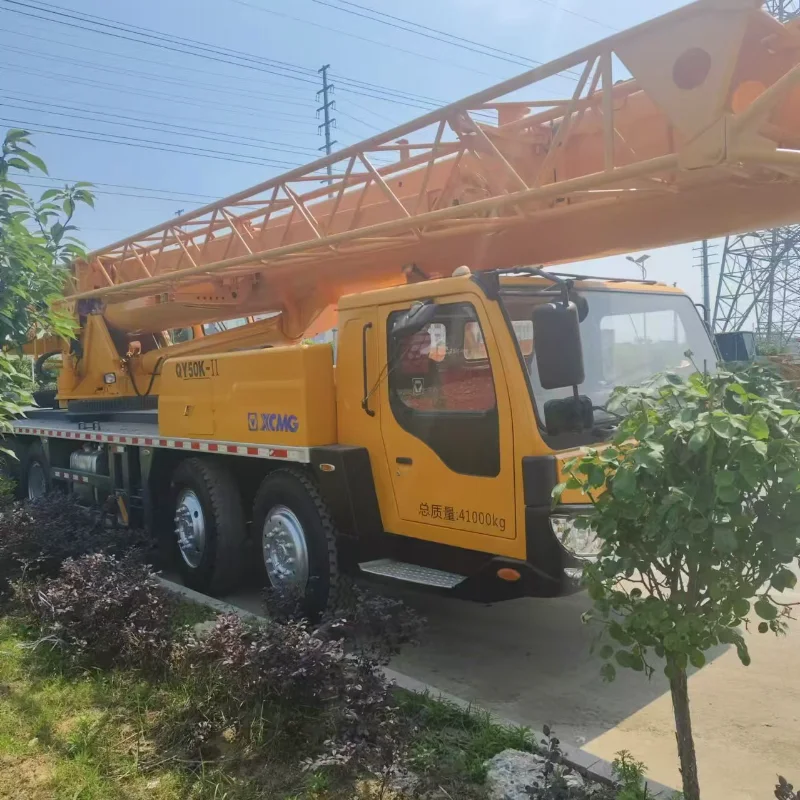
A used XCMG 50 ton mobile crane may be suitable for a range of construction and industrial lifting tasks, but its rated capacity alone does not determine whether it fits a particular project. Buyers should evaluate the crane against their actual lifting plan before comparing prices or requesting quotations.
Start With the Actual Lifting Requirements
Before choosing a truck crane, define the heaviest load to be lifted, the required lifting height, and the horizontal distance between the crane's center of rotation and the load.
Check Load Weight and Working Radius
A truck crane's rated capacity is not available at every working radius. As the boom extends and the working radius increases, the maximum permitted lifting capacity generally decreases.
For example, lifting a heavy component close to the crane may require a different configuration from placing a lighter load several meters away from the machine. Buyers should use the manufacturer's load chart to confirm the allowable capacity for the intended boom length, working radius, outrigger extension, and counterweight configuration.
Include the weight of lifting accessories, such as hooks, slings, and other rigging equipment, where required by the applicable load chart and lifting procedure. These details can materially affect whether a particular crane is suitable.
Determine the Required Lifting Height and Reach
Maximum lifting height is only one part of crane selection. The boom must also reach the required position while maintaining the necessary clearance from buildings, power lines, adjacent structures, and other obstacles.
Review the boom length, boom angle, working radius, and any available jib configuration. If the job involves lifting materials over a building or positioning equipment on an elevated structure, confirm that the crane can complete the entire lift within its permitted operating envelope.
Compare Truck Crane Capacity With Your Project Needs
Choosing a larger crane than necessary may increase purchase, transportation, and operating costs. Choosing one that is too small can make the planned lift impractical or require additional equipment.
A used 50 ton truck crane can be worth evaluating when a project involves substantial lifting requirements but does not consistently demand the capacity of a much larger machine. However, the appropriate capacity must be determined from the load chart and the actual lifting conditions rather than the tonnage stated in the product name.
| Selection factor | What buyers should check | Why it matters |
|---|---|---|
| Maximum load weight | Heaviest planned load, including relevant lifting accessories | Establishes the minimum capacity requirement |
| Working radius | Horizontal distance from the crane's center of rotation to the load | Determines the available lifting capacity |
| Lifting height | Required hook height and obstacle clearance | Helps establish boom and jib requirements |
| Site conditions | Ground bearing capacity, slope, and available outrigger space | Affects stability and safe crane setup |
| Job frequency | Occasional lifts or repeated daily operations | Influences equipment utilization and ownership costs |
| Transport requirements | Road access, machine dimensions, and local restrictions | Determines whether the crane can reach the job site |
A proper comparison should consider all these factors together. Rated tonnage is a useful starting point, not a substitute for checking the lifting configuration.
Match the Crane Type to the Job Site
Truck cranes are often considered for projects that require road mobility between work locations and lifting capability at the destination. Their suitability depends on the specific chassis, crane configuration, road regulations, and site conditions.
Construction and Infrastructure Projects
Construction projects may require lifting steel components, construction materials, precast elements, or equipment into position. Buyers should consider the required working radius, lifting height, site access, and frequency of repositioning.
For projects with multiple lifting locations, road mobility and setup time may be important selection factors. However, a truck crane must still be positioned on suitable ground and configured according to its operating instructions before lifting.
Industrial Installation and Equipment Handling
Industrial projects can involve positioning machinery, structural components, or production equipment in areas with limited access. The required lifting radius and clearance may be more important than the maximum rated capacity.
Before purchasing, determine whether the crane can reach the load without interfering with surrounding structures. Confirm that the planned lifting configuration is supported by the manufacturer's load chart and that the site can accommodate the required outrigger footprint.
General Lifting and Contractor Operations
Contractors handling a variety of projects may prefer equipment that can support different lifting tasks. In this case, versatility should be evaluated against the actual range of loads, lifting heights, and site conditions the crane will encounter.
A crane with a higher nominal capacity is not automatically the better investment. The best option is one that covers the contractor's regular workload without creating unnecessary acquisition and maintenance costs.
Evaluate a Used XCMG Truck Crane Before Purchase
After identifying the required capacity and operating configuration, buyers should assess the machine's actual condition. Two cranes with similar rated capacities may have substantially different maintenance needs and remaining service life.
Inspect the Hydraulic and Boom Systems
The boom, telescoping mechanism, hydraulic cylinders, hoses, and connections should be checked for visible damage, leakage, abnormal movement, or signs of poor maintenance.
Where possible, arrange a functional inspection to assess boom extension and retraction, hoisting, slewing, and other operating functions. Any irregular movement or hydraulic leakage should be investigated before the purchase is finalized.
Check the Chassis and Mechanical Components
The chassis and truck systems are essential to safe transportation and operation. Review the engine, transmission, braking system, steering, tires, suspension, and available maintenance records.
Inspect the crane's structural components for cracks, deformation, corrosion, or evidence of repairs. The turntable, outrigger assemblies, and supporting structures also deserve careful attention because they carry significant loads during lifting operations.
Verify Safety Devices and Documentation
Confirm that relevant load charts, operating manuals, machine identification details, and maintenance records are available. Depending on the model and applicable requirements, buyers should also check the condition and function of load moment indicators, rated-capacity limiters, and other safety devices.
Do not rely solely on photographs or the seller's description. A pre-purchase inspection by a qualified crane technician can help identify issues that may not be visible in a listing.
Compare Used XCMG QY50K Truck Cranes With Other Options
When evaluating a used XCMG QY50K truck crane, buyers should compare the actual machine configuration and condition with other available equipment rather than making a decision based on brand or model name alone.
Consider the following points when comparing options:
- Lifting capability: Confirm the load chart and configuration required for the planned work.
- Equipment condition: Compare operating performance, structural condition, maintenance history, and any necessary repairs.
- Parts and servicing: Check access to suitable replacement parts and qualified technicians in the destination market.
- Transportation: Review the crane's dimensions, weight, transport arrangements, and applicable road requirements.
- Total cost: Include the purchase price, inspection, shipping, import charges, initial servicing, and expected maintenance.
A used hydraulic mobile crane should also be assessed according to the condition of its hydraulic system and lifting components. The crane's general appearance is not a reliable substitute for a functional inspection and review of its operating records.
Calculate the Total Cost of Buying a Used Truck Crane
The advertised price is only one part of the purchasing decision, particularly for overseas buyers sourcing equipment from China.
The total acquisition cost may include the purchase price, inspection fees, inland transportation, export handling, international freight, insurance, destination-port charges, customs duties, taxes, and delivery to the final site. Initial servicing or replacement parts may also be necessary before the crane enters service.
Ask suppliers to clarify what is included in their quotations and compare offers using consistent delivery terms. Import requirements vary by destination country, so buyers should confirm applicable machinery regulations, documentation requirements, and road-use restrictions before committing to a purchase.
It is also useful to compare the expected maintenance cost and equipment utilization over the planned ownership period. A lower-priced crane may require more immediate repairs, while a better-maintained machine may offer more predictable operating costs.
Make the Final Decision Based on the Lift, Not Just the Price
The right used truck crane is the one that can perform the required lifts within its approved operating configuration, fit the job site's physical constraints, and meet the buyer's budget and maintenance expectations.
For buyers considering a used XCMG 50 ton mobile crane, the next step is to compare the actual specifications, load chart, operating condition, and available documentation against the planned lifting tasks. This approach helps narrow the selection to machines that are suitable for evaluation.
Debo Machinery supplies used construction equipment for overseas buyers, including truck cranes from established manufacturers. Contact the team with your required lifting capacity, working radius, lifting height, and destination country to check available options and discuss export arrangements.