Used Japanese Forklift Brands Comparison: Toyota vs Mitsubishi vs TCM
Release time: 2026-09-24
Table of Contents
Japanese forklifts remain a popular choice in the global used-equipment market because they are widely recognized for practical design, dependable performance, and suitability for many material-handling environments. From warehouse pallet movement and truck loading to factory logistics, container handling, and outdoor yard work, the right forklift can improve efficiency while helping control equipment costs.
When comparing Toyota, Mitsubishi, and TCM, buyers should look beyond the badge on the counterweight. Each brand has strengths, but the real value of a used forklift depends on its capacity, mast configuration, power type, service condition, operating hours, and suitability for the intended job.
For warehouses, trading companies, manufacturers, and logistics operators, this guide explains the typical differences between used Toyota forklifts, used Mitsubishi forklifts, and used TCM forklifts—and how to select the most suitable option for daily operations.
Why Choose a Used Japanese Forklift?
A used Japanese forklift can be a practical investment for businesses that need reliable lifting and transport capacity without the larger upfront cost of a brand-new machine. Japanese forklift brands have been used for decades in industrial facilities, distribution centers, warehouses, ports, workshops, and loading areas around the world.
Many buyers consider Japanese-used equipment because it can offer a good balance of durability, availability, and operating value. Common advantages include:
- Strong chassis and mast construction for regular industrial work
- Stable hydraulic lifting, lowering, and tilting functions
- Proven diesel, gasoline, LPG, and electric power options
- Familiar machine layouts for forklift operators and technicians
- Broad capacity coverage for light, medium, and heavy-duty tasks
- Suitable configurations for warehouses, factories, yards, and containers
- Good availability of common maintenance items and replacement parts in many markets
However, a brand name is only part of the decision. A well-maintained forklift with clear specifications and a suitable configuration is usually a better purchase than a famous brand with an uncertain maintenance history.
Before choosing between Toyota, Mitsubishi, and TCM, buyers should define the actual working requirements of the site.
Start With the Working Environment
The best forklift depends on where and how it will operate. A machine that performs well in a spacious outdoor yard may not be the right choice for a narrow-aisle warehouse. Likewise, a compact warehouse forklift may not have enough power or traction for heavy outdoor loading work.
Consider the following before comparing brands:
- Maximum load weight and pallet dimensions
- Required lifting height and rack layout
- Warehouse aisle width and turning space
- Doorway, loading dock, and container-entry clearance
- Indoor, outdoor, or mixed operating conditions
- Daily working hours and shift schedule
- Fuel availability and emissions requirements
- Floor condition, ramps, slopes, and surface type
- Need for side shifters, fork positioners, clamps, or long forks
- Availability of local maintenance support and spare parts
A 2.5-ton or 3-ton forklift may be suitable for normal palletized goods, but it may not be appropriate for long loads, high-level racking, or irregular cargo. Similarly, a diesel forklift may be ideal for outdoor logistics work but less suitable for an enclosed warehouse with limited ventilation.
Selecting the right configuration is often more important than selecting the most familiar brand.
Used Toyota Forklifts: Versatile for Warehouse and Logistics Work
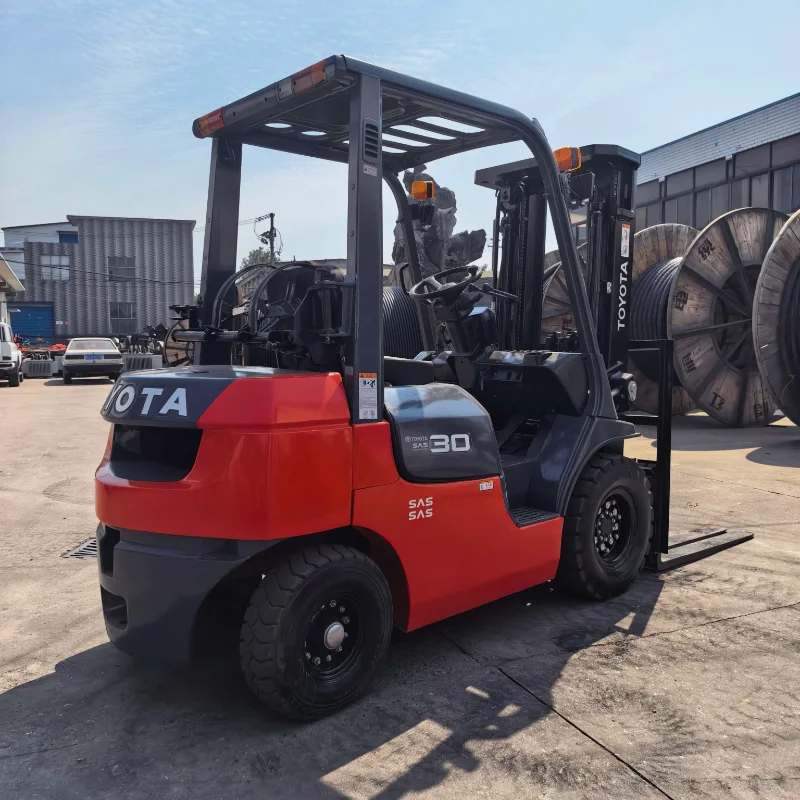
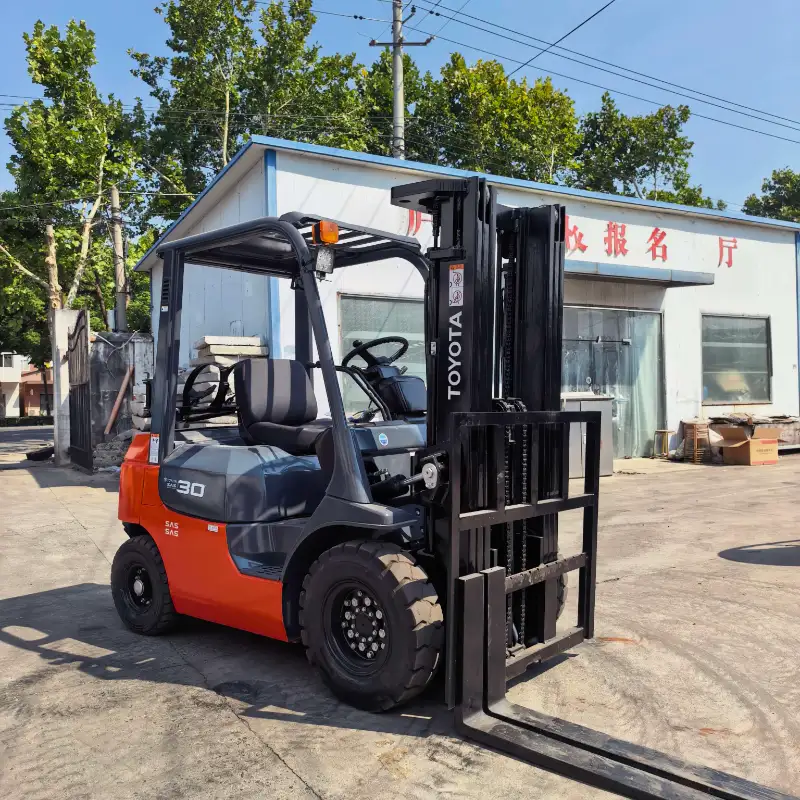
Used Toyota forklifts are often considered by buyers who need a versatile machine for routine warehouse, factory, distribution, and loading-dock work. Toyota models are common in the used market and can be found in diesel, gasoline, LPG, and electric configurations.
Toyota forklifts are frequently used for standard pallet handling, truck loading and unloading, internal transport, rack storage, and general warehouse movement. Their broad range of configurations makes them suitable for businesses with relatively consistent daily workloads.
Typical capacities in the used market include 1.5 tons, 2 tons, 2.5 tons, 3 tons, 3.5 tons, and 5 tons, along with higher-capacity machines for more demanding applications.
Common applications
- Warehouse pallet handling
- Distribution-center operations
- Loading and unloading delivery trucks
- Factory material transfer
- Packaging and consumer-goods logistics
- Retail and wholesale storage
- Mixed indoor-outdoor handling tasks
For a standard warehouse, a 2.5-ton or 3-ton Toyota counterbalance forklift can be a practical choice when the operation mainly handles conventional pallets and needs regular truck loading, storage, and movement between work areas.
Toyota forklifts are often selected for their balanced handling characteristics. However, buyers should compare the actual mast height, lowered mast clearance, fork length, tire type, engine or battery condition, and turning radius with the warehouse layout.
What to inspect
When evaluating a used Toyota forklift, check the following:
- Cold-start performance and engine response for diesel or gasoline models
- Battery age, battery capacity, and charger compatibility for electric models
- Transmission response in forward and reverse
- Hydraulic lift, lowering, tilt, and side-shift operation
- Mast rails, rollers, lift chains, cylinders, and welds
- Fork wear, fork heel thickness, and locking pins
- Brake performance, steering response, tires, lights, and horn
- Capacity plate, lift height, mast type, and available service records
A Toyota forklift can be a strong all-round choice, but the right unit must still match the actual loads, lift heights, and operating environment.
Used Mitsubishi Forklifts: Stable Performance for Industrial Operations
Used Mitsubishi forklifts are widely found in factories, logistics centers, warehouses, loading zones, industrial yards, and mixed indoor-outdoor working environments. They are often considered by buyers who need steady performance for repeated lifting, stacking, transfer, and loading tasks.
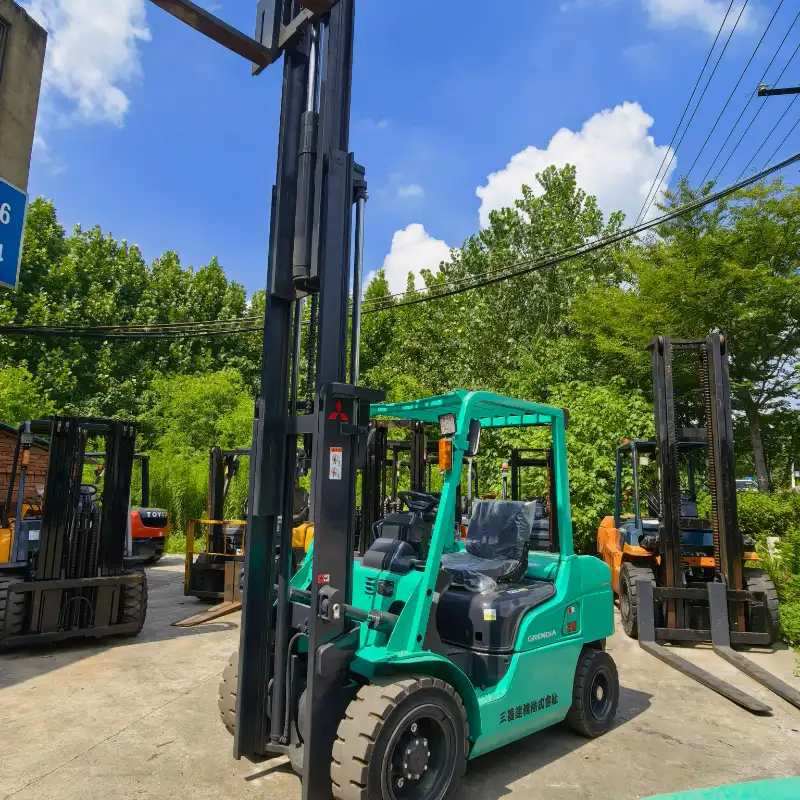
Mitsubishi models are available in a range of power options, including diesel, gasoline, LPG, and electric. In the used-equipment market, diesel forklifts are especially common for factory logistics, loading operations, building-material handling, outdoor storage areas, and well-ventilated warehouses.
A 3-ton Mitsubishi diesel forklift can be a suitable option for businesses handling standard pallets, industrial materials, packaged goods, and production-related cargo. When paired with a three-stage mast, it may also support higher warehouse racking while maintaining a relatively compact lowered mast height.
Common applications
- Factory logistics and production-line supply
- Warehouse receiving and dispatch
- Truck loading and unloading
- Outdoor material transfer
- Building-material and industrial-supply handling
- Logistics yards and loading docks
- Container-adjacent cargo movement
Mitsubishi forklifts are generally suitable for operations that require a practical, stable machine across different working areas. Buyers should choose between diesel, gasoline, LPG, or electric power based on ventilation, workload, refueling or charging capability, and local operating regulations.
For high-rack storage, confirm the rated capacity at the required lifting height. A forklift can lift less than its nominal rating when working with a high mast, a long load center, or a heavy attachment.
What to inspect
Before purchasing a used Mitsubishi forklift, inspect:
- Engine starting condition, exhaust appearance, noise level, and cooling system
- Transmission performance and travel response
- Hydraulic lifting and tilting functions
- Mast condition, lift chains, rollers, pins, and cylinders
- Fork condition and attachment operation
- Tire condition, steering precision, and braking response
- Chassis structure and signs of corrosion, welding, or impact damage
- Operator seat, seat belt, overhead guard, lights, horn, and safety systems
- Operating hours and available maintenance documentation
For buyers working in facilities with higher storage levels, a clear understanding of mast configuration and lifting capacity is especially important.
Used TCM Forklifts: Practical Value for Warehouse, Yard, and Heavy Work
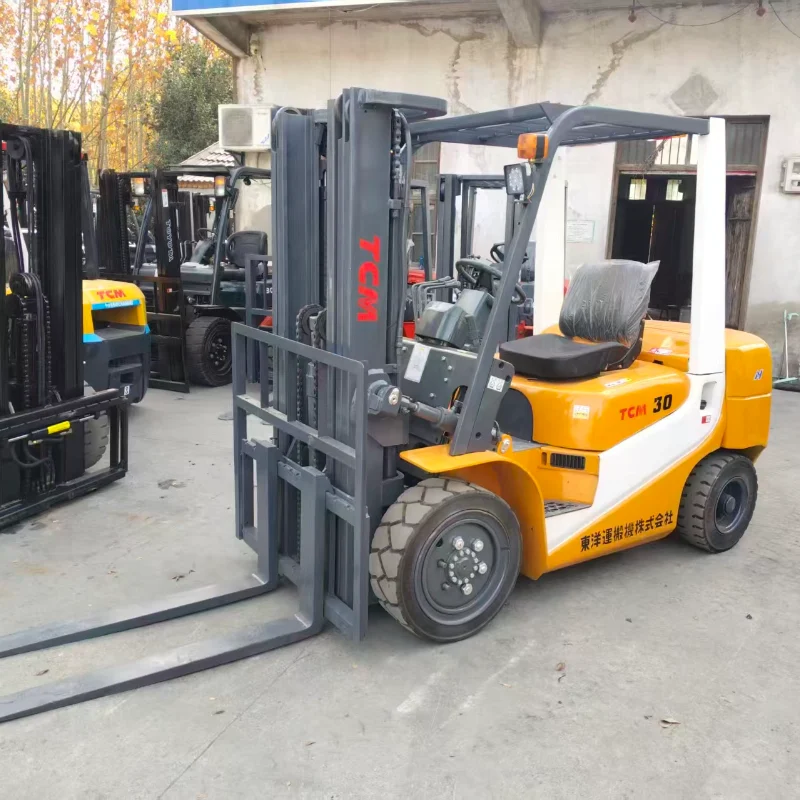
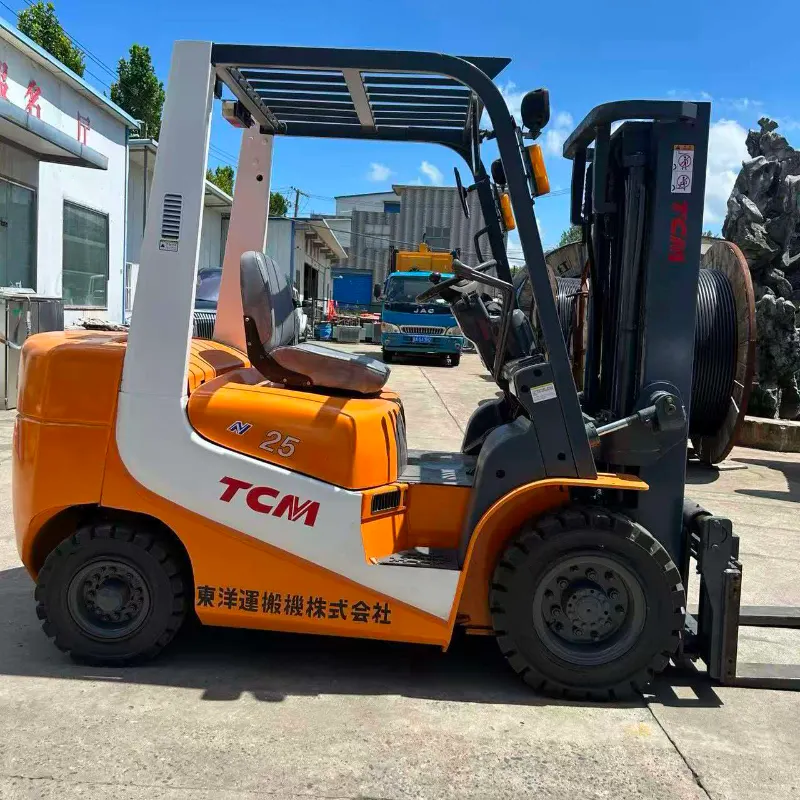
Used TCM forklifts are often chosen by buyers who prioritize practical working performance, durable construction, and competitive value. TCM has long been present in the Japanese forklift market, and its used machines are commonly found in warehouses, factories, logistics yards, loading areas, container operations, and industrial sites.
TCM diesel forklifts are especially common in the used market. They are available in capacities suitable for standard warehouse work as well as heavier applications. Smaller models can support pallet handling and truck loading, while larger machines can be used for industrial materials, machinery, building products, timber, steel, and other heavy cargo.
A 2.5-ton or 3-ton TCM forklift can be suitable for routine warehouse and factory work. For larger loads, 5-ton, 7-ton, 10-ton, and higher-capacity models may be considered, depending on the load dimensions, operating surface, lift height, and attachment requirements.
Common applications
- Daily warehouse pallet movement
- Factory material transport
- Truck loading and unloading
- Container loading and unloading
- Outdoor logistics-yard work
- Construction-material handling
- Industrial workshop operations
- Heavy cargo transfer with larger-capacity models
TCM forklifts can be a practical option when a business needs a capable machine while managing the overall purchase budget. As with all used equipment, condition is critical. Buyers should verify whether the forklift has been maintained regularly and whether its engine, hydraulics, mast, and transmission remain in suitable working order.
What to inspect
When evaluating a used TCM forklift, focus on:
- Diesel-engine condition and starting performance
- Hydraulic cylinders, hoses, valves, and lifting response
- Transmission engagement and smooth forward-reverse movement
- Mast channels, rollers, chains, and structural condition
- Forks, carriage, side shifter, and attachment function
- Tires and suitability for warehouse floors, yards, or uneven ground
- Brake condition, parking brake, steering system, and wheel alignment
- Oil leakage, chassis wear, counterweight condition, and visible repairs
- Capacity plate, actual lifting height, and load-center specifications
For larger TCM machines, buyers should be especially careful about load-center calculations. A long, heavy, or uneven load can reduce the safe operating capacity of the forklift.
Toyota vs Mitsubishi vs TCM: Quick Comparison
| Comparison area | Toyota | Mitsubishi | TCM |
|---|---|---|---|
| Typical buyer need | Versatile daily warehouse and logistics work | Stable factory, warehouse, and mixed-environment performance | Practical value for warehouse, yard, and industrial handling |
| Common working areas | Warehouses, distribution centers, factories, loading docks | Factories, logistics centers, warehouses, yards, loading areas | Warehouses, factories, yards, containers, industrial sites |
| Common used-market capacities | 1.5–5 tons and above | 2.5–5 tons and above | 2.5–10 tons and above |
| Typical power options | Diesel, gasoline, LPG, electric | Diesel, gasoline, LPG, electric | Mainly diesel and gasoline in many used markets |
| Useful for standard pallets | Yes | Yes | Yes |
| Suitable for outdoor yard work | Depends on power type and tires | Often suitable, especially diesel configurations | Often suitable, especially diesel and larger-capacity models |
| Key advantage | Balanced choice for general material movement | Practical stability for repeated industrial work | Competitive value and broad use in daily handling |
| Key purchasing focus | Match mast and power type to warehouse needs | Confirm engine, mast, and lifting needs | Inspect hydraulic condition, capacity, and maintenance history |
This table provides a general market comparison. Individual forklift models may differ substantially depending on their production year, fuel type, rated capacity, mast design, attachments, operating hours, maintenance records, and previous work environment.
Important Buying Factors Beyond Brand
Brand comparison can help buyers narrow their options, but it should not replace equipment inspection. Two forklifts with the same rated capacity may perform very differently if one has a worn mast, weak hydraulic system, poor tires, or an engine with maintenance issues.
Before confirming a purchase, review these points carefully:
- Rated lifting capacity and load-center rating
- Maximum lift height and lowered mast height
- Warehouse ceiling, doorway, and container-entry clearance
- Aisle width, turning radius, and pallet dimensions
- Power source suitability for indoor or outdoor use
- Daily operating hours and expected duty cycle
- Fork length and attachment requirements
- Mast condition, lift chains, rollers, and cylinders
- Engine, transmission, hydraulics, steering, and brakes
- Tire condition for concrete floors, asphalt yards, ramps, or uneven surfaces
- Local access to spare parts, maintenance technicians, and consumables
- Shipping dimensions, loading method, and delivery arrangement
The most suitable forklift is one that can safely complete the required work without being oversized, underpowered, or difficult to maintain.
Final Thoughts
Toyota, Mitsubishi, and TCM all offer useful options for buyers sourcing used Japanese forklifts. Toyota may suit businesses seeking a versatile machine for routine warehouse and distribution work. Mitsubishi can be a practical choice for factory logistics, loading operations, and mixed working environments. TCM may offer strong value for warehouse handling, yard work, container loading, and heavier industrial applications.
The final decision should be based on real working requirements rather than brand preference alone. Check the load weight, load center, lift height, aisle width, fuel type, mast configuration, machine condition, and service support before purchasing.
For buyers who are comparing available Japanese forklift options, Debo Machinery can help identify suitable models based on capacity, brand preference, power type, lift-height requirements, and intended application. The goal is to select equipment that fits the job, supports stable daily operations, and provides practical long-term value.