How to Choose the Right Forklift for Your Warehouse: A Complete Buyer’s Guide
Release time: 2026-09-18
Table of Contents
Choosing the right forklift can have a major impact on warehouse productivity, operating safety, and long-term operating costs. A forklift is not simply a machine for lifting pallets. It is a key part of the material-flow system that supports receiving, storage, order picking, loading, unloading, and internal transport.
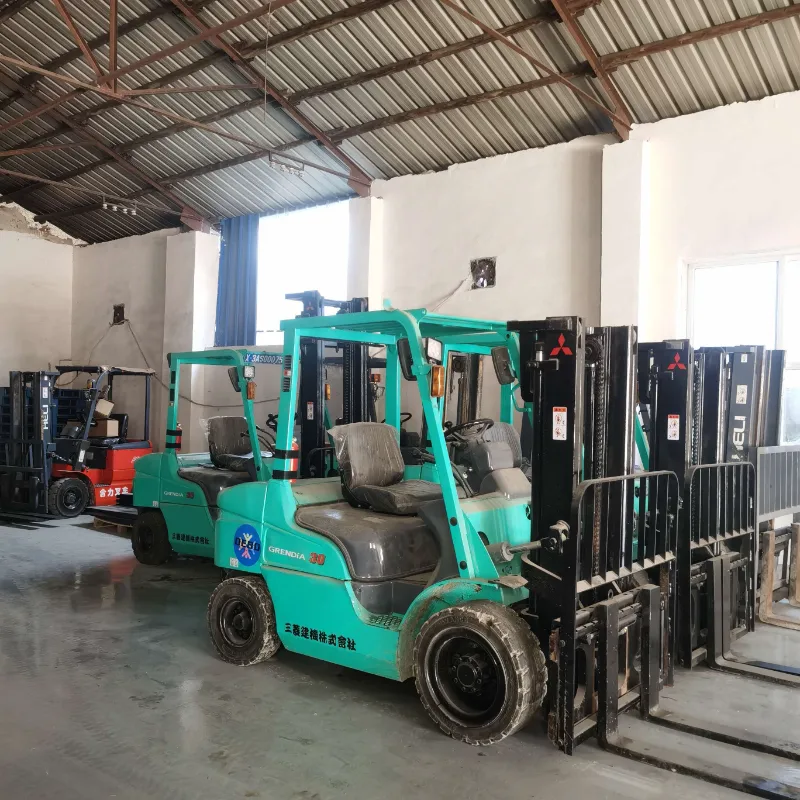
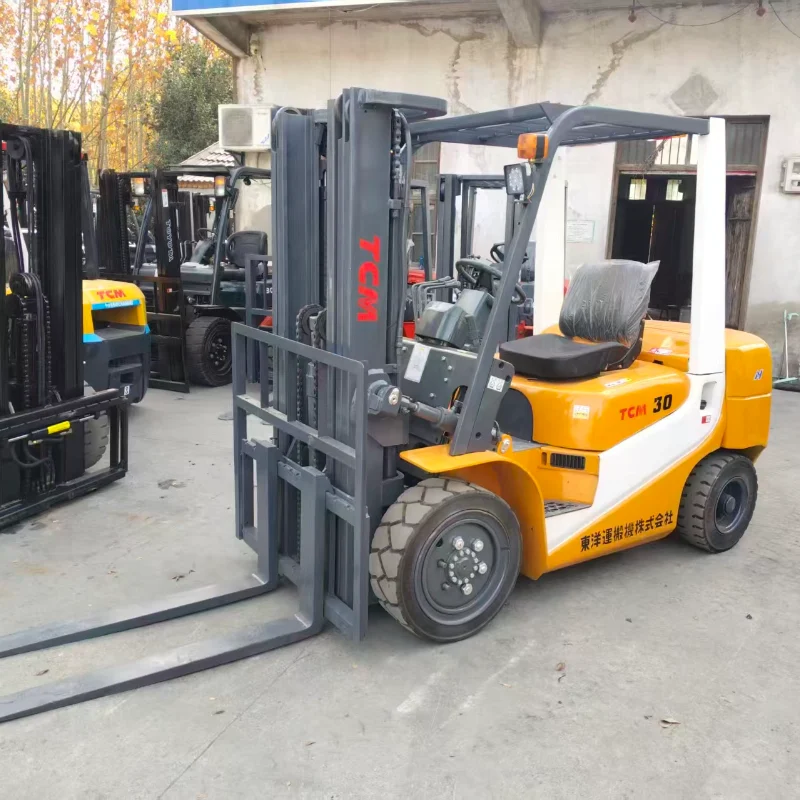
For many businesses, purchasing a used forklift for sale is a practical way to obtain reliable lifting capacity without the higher upfront cost of a new machine. However, selecting the right model requires more than comparing prices or choosing the highest rated capacity. The best forklift is the one that fits the real conditions of the warehouse: load weight, lift height, aisle width, operating hours, floor condition, power preference, and maintenance capability.
This complete warehouse forklift buying guide explains the most important factors to consider before making a purchase.
1. Understand Your Daily Material-Handling Tasks
The first step is to define what the forklift will do every day. Warehouses have different operating patterns, and the correct machine for one facility may not be suitable for another.
Start by reviewing these questions:
- What types of goods will be handled?
- What is the maximum pallet or load weight?
- How high must goods be lifted?
- How often will the forklift operate each day?
- Will the machine work indoors, outdoors, or in both areas?
- Does the operation include loading trucks or containers?
- Are the loads standard pallets, long materials, cartons, machinery, or irregular cargo?
A forklift used for unloading containers may need strong traction, reliable engine performance, and a compact mast height. A forklift used in a high-rack warehouse may require a three-stage mast with a high lift height. A machine used for transporting heavy machinery may require a larger capacity, reinforced chassis, and stronger hydraulic system.
Defining the real application first makes industrial forklift purchasing more accurate and cost-effective.
2. Select the Correct Forklift Capacity
Capacity is one of the most important forklift selection criteria. Forklift capacity refers to the maximum weight the machine can safely lift under specified conditions. Common forklift capacities include 1.5 tons, 2 tons, 2.5 tons, 3 tons, 3.5 tons, 5 tons, 7 tons, 10 tons, 16 tons, and 25 tons.
A 2.5-ton or 3-ton forklift is often suitable for standard warehouse pallet handling, truck loading, and general material movement. Larger forklifts are usually selected for steel products, timber, construction materials, industrial equipment, stone, machinery, or port and yard operations.
However, buyers should not select a forklift based only on the heaviest load. The load center also matters.
The load center is the distance from the fork face to the center of gravity of the load. A standard rated capacity is usually calculated with a specified load center. If a load is long, oversized, uneven, or carried with an attachment, the effective lifting capacity may be lower.
For example, a forklift rated at 3 tons may not safely lift a 3-ton load when the load center is extended. Longer forks, clamps, side shifters, and other attachments can also affect the available capacity.
Always check the capacity plate and confirm that the forklift can handle the actual load weight, dimensions, and load center used in daily work.
3. Match Lift Height to Your Racking System
Lift height is another essential factor when choosing a warehouse material handling forklift. The forklift must lift goods safely to the highest rack level while maintaining stability and sufficient capacity.
Before buying, measure:
- The height of the highest storage position
- The clearance between the top rack and the ceiling
- The height of warehouse doors and loading entrances
- The collapsed mast height needed to enter the warehouse or container
- The required free lift height for container or low-clearance work
A standard two-stage mast may be suitable for general loading and lower-level storage. A three-stage mast is often a better choice for warehouses with higher racking because it can provide a greater lift height while keeping a lower overall mast height when lowered.
For high-level pallet storage, buyers may consider lift heights of 4.5 meters, 5 meters, 6 meters, or more, depending on the warehouse layout. At the same time, it is important to confirm that the forklift can pass through doors and work safely beneath ceiling structures.
4. Measure Aisle Width and Turning Space
A forklift with the correct lifting capacity may still be inefficient if it cannot move easily through the warehouse. Aisle width, turning radius, overall machine width, and pallet dimensions must be considered together.
Narrow aisles improve storage density, but they also require more compact and maneuverable equipment. In a standard warehouse with adequate turning space, a counterbalance forklift is often a flexible choice for receiving, storing, and loading goods.
Before selecting a machine, measure:
- Main aisle width
- Racking aisle width
- Distance between rack rows
- Loading dock space
- Door width and height
- Truck or container entrance dimensions
- Turning space at the end of each aisle
- Floor slopes, ramps, and uneven areas
For warehouses with limited space, a compact forklift with a smaller turning radius can improve productivity and reduce the risk of rack or wall damage. In high-density storage facilities, specialized narrow-aisle equipment may be more suitable than a standard counterbalance forklift.
5. Choose the Best Power Type
Forklift power type should match the operating environment, work schedule, ventilation conditions, and local fuel availability. The main options are diesel, gasoline, LPG, and electric forklifts.
Diesel Forklifts
Diesel forklifts are widely used for outdoor work, loading yards, container operations, industrial factories, construction-material handling, ports, and heavy-duty applications. They generally offer strong torque, durable performance, and reliable operation under demanding conditions.
A diesel forklift can be a good choice for warehouses with open loading areas, regular truck loading, and mixed indoor-outdoor work. However, diesel machines are typically more appropriate for well-ventilated workplaces because of exhaust emissions.
Used diesel forklifts are commonly available in capacities from 1.5 tons to heavy-duty models exceeding 20 tons. Popular choices include Japanese-origin forklifts and established industrial brands with durable engines and widely available spare parts.
Gasoline and LPG Forklifts
Gasoline and LPG forklifts can be suitable for businesses that need flexible performance for mixed indoor and outdoor work. They can offer fast refueling and steady power output for medium-duty or high-frequency handling tasks.
These models are often used in warehouses, distribution centers, manufacturing workshops, building-material operations, and loading areas. Buyers should still evaluate local fuel supply, emissions requirements, maintenance support, and operator preference.
Electric Forklifts
Electric forklifts are commonly used in indoor warehouses, food storage, pharmaceutical facilities, retail distribution centers, and clean working environments. They produce no exhaust emissions during operation and usually operate with lower noise levels.
When choosing an electric forklift, buyers should consider battery condition, charging time, battery lifespan, shift length, charger availability, and floor conditions. For multi-shift work, a business may need additional batteries, quick-charging solutions, or multiple units to maintain continuous operation.
6. Choose the Right Mast, Forks, and Attachments
The mast, forks, and attachments directly influence what a forklift can safely handle. The correct configuration improves speed, accuracy, and operational safety.
Common mast types include:
- Two-stage standard mast
- Two-stage full-free lift mast
- Three-stage mast
- High-lift mast
- Container mast
A full-free lift mast can be useful inside containers or low-ceiling areas because the forks can rise before the mast extends fully upward. A three-stage mast is often used where a high lift height is required but the lowered mast must remain compact.
Fork length should match the pallet depth and load type. Forks that are too short may not support the load adequately. Forks that are too long can create handling difficulties in confined spaces.
Useful attachments may include:
- Side shifters
- Fork positioners
- Longer forks
- Paper-roll clamps
- Carton clamps
- Bale clamps
- Rotators
- Drum handlers
A side shifter is one of the most practical attachments for warehouse work. It allows operators to move a load slightly left or right without moving the full machine, improving pallet positioning and reducing unnecessary maneuvering.
Keep in mind that attachments add weight and may reduce the forklift’s effective lifting capacity. Confirm the revised capacity data before using attachments with heavy or irregular loads.
7. Evaluate a Second-Hand Forklift Carefully
A quality second‑hand forklift can provide strong value for warehouses, factories, trading companies, logistics businesses, and project-based operations. It may allow buyers to access established forklift brands, higher capacities, or specialized mast configurations at a more manageable budget.
However, not all used equipment offers the same value. A lower purchase price does not automatically mean a lower total cost.
When inspecting a used forklift, check the following areas:
- Engine starting performance and running condition
- Exhaust smoke, unusual noise, or visible leaks
- Transmission engagement and travel response
- Hydraulic lifting, tilting, lowering, and side-shift functions
- Mast rails, rollers, lift chains, pins, and welds
- Fork thickness, fork heel condition, and locking system
- Tire wear, wheel condition, and steering response
- Service brake and parking brake performance
- Battery condition and charger compatibility for electric models
- Hour meter reading and service history
- Chassis condition and signs of impact, corrosion, or structural repair
- Availability of spare parts and routine maintenance items
A good used forklift should be evaluated based on working condition, maintenance quality, specifications, and application suitability—not only age or operating hours.
8. Consider Total Cost of Ownership
The purchase price is important, but it should not be the only factor in a forklift decision. The true cost of ownership includes fuel or electricity use, maintenance, repairs, spare parts, downtime, operator productivity, and resale value.
A forklift that is cheaper at the beginning may become more expensive if it consumes excessive fuel, requires frequent repairs, or cannot meet the required workload.
Consider these cost factors before buying:
| Cost area | What buyers should evaluate |
|---|---|
| Initial investment | Purchase price, transport cost, configuration, and attachments |
| Fuel or energy use | Diesel, gasoline, LPG, or electricity consumption |
| Maintenance needs | Filters, oils, tires, hydraulic parts, batteries, and service intervals |
| Spare parts access | Availability of engine, transmission, mast, brake, and electrical parts |
| Operational efficiency | Turning ability, lift speed, visibility, stability, and operator comfort |
| Downtime risk | Equipment condition, maintenance history, and local repair support |
| Future resale value | Brand reputation, capacity, overall condition, and market demand |
The best choice is usually a machine that can complete the required job efficiently, safely, and consistently over time.
9. Prioritize Operator Safety
Safety should be a central part of every forklift buying decision. The right equipment supports safer operation, but operators must also receive proper training and follow daily inspection procedures.
Before purchasing, confirm that the forklift has:
- A clear and readable capacity plate
- Functional brakes and parking brake
- Responsive steering system
- Working lights, horn, and warning signals
- Seat belt and operator-protection features
- Stable overhead guard
- Load backrest extension
- Secure forks and fork-locking system
- Tires suitable for the working surface
- Good mast visibility
- No major hydraulic leaks or structural damage
Forklift safety also depends on correct usage. Operators should never overload the machine, travel with raised loads, carry unstable goods, or use damaged forks. Load weight, load center, aisle conditions, and lifting height must always be considered before operation.
10. Final Checklist Before Buying
Use this checklist before confirming your forklift purchase:
- Confirm the maximum weight and dimensions of your typical loads.
- Check the load center and required capacity at full lift height.
- Measure the highest rack level and required mast lift height.
- Measure aisle width, turning space, doors, docks, and container entrances.
- Select diesel, gasoline, LPG, or electric power based on the work environment.
- Choose the correct mast type, fork length, and necessary attachments.
- Review the forklift’s engine, hydraulics, transmission, tires, mast, and safety systems.
- Check machine hours, service records, and available inspection information.
- Confirm spare-parts availability and maintenance support.
- Compare total ownership cost rather than purchase price alone.
Choose for the Job, Not Just the Price
The right forklift helps create a faster, safer, and more organized warehouse operation. It can reduce handling time, improve storage efficiency, support reliable loading and unloading, and lower the risk of costly downtime.
When comparing a used forklift for sale, focus on the real requirements of your operation. Select the appropriate capacity, lift height, power type, mast configuration, and machine condition. A carefully chosen forklift is not only a piece of equipment—it is a long-term investment in warehouse efficiency, safety, and business growth.