How to Compare Japanese Used Forklift Models for Different Warehouse Applications
Release time: 2026-10-24
Table of Contents
Choosing a used forklift for a warehouse involves more than comparing prices or lifting capacities. A machine that works well in a large distribution center may be unsuitable for a warehouse with narrow aisles, low doorways, or limited charging facilities. Buyers sourcing Japanese used forklifts should evaluate each model against their actual operating conditions, load requirements, and long-term maintenance needs.
For international buyers, the comparison also needs to account for shipping costs, parts availability, and import regulations. The right purchasing decision balances equipment suitability with the total cost of bringing the forklift into service.
Identify Your Warehouse Requirements Before Comparing Forklift Models
Before reviewing Japanese used forklifts for sale, define the basic requirements of the warehouse. This helps narrow the selection to models that can perform the required tasks without unnecessary operating costs.
Load Weight and Lifting Height
Start by identifying the maximum weight of the loads the forklift will handle and the height at which they must be placed. Consider the load's dimensions and center of gravity, not just its total weight.
A forklift's rated capacity may decrease when the load center increases or when certain attachments are installed. Buyers should therefore verify the capacity plate and any applicable load chart before selecting a machine.
Lifting height is equally important. Warehouses with high pallet racking may require a different mast configuration from facilities that primarily move pallets at floor level. Check both maximum lifting height and lowered mast height to ensure the forklift can operate within the building's vertical clearance limits.
Aisle Width and Turning Space
Warehouse layout directly affects forklift selection. Narrow aisles may require a compact counterbalance forklift, a reach truck, or another specialized warehouse truck, depending on the racking arrangement and handling process.
Measure aisle width, turning areas, doorways, and the space available for loading and unloading. The forklift's overall width and turning radius should be evaluated alongside the dimensions of the pallets and loads being handled.
Do not rely on the machine's overall dimensions alone. The required operating aisle width depends on the forklift design, load dimensions, turning geometry, and the manufacturer's specifications.
Compare Forklift Types for Different Warehouse Applications
Different forklift designs address different material handling requirements. Understanding their strengths and limitations helps buyers identify suitable used models before requesting quotations.
Counterbalance Forklifts for General Warehouse Operations
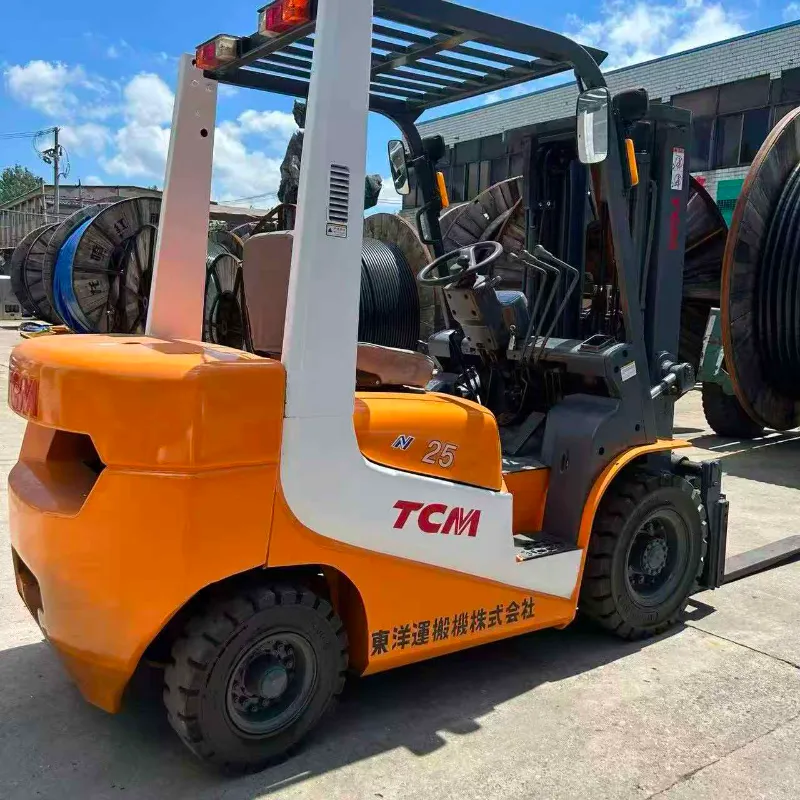
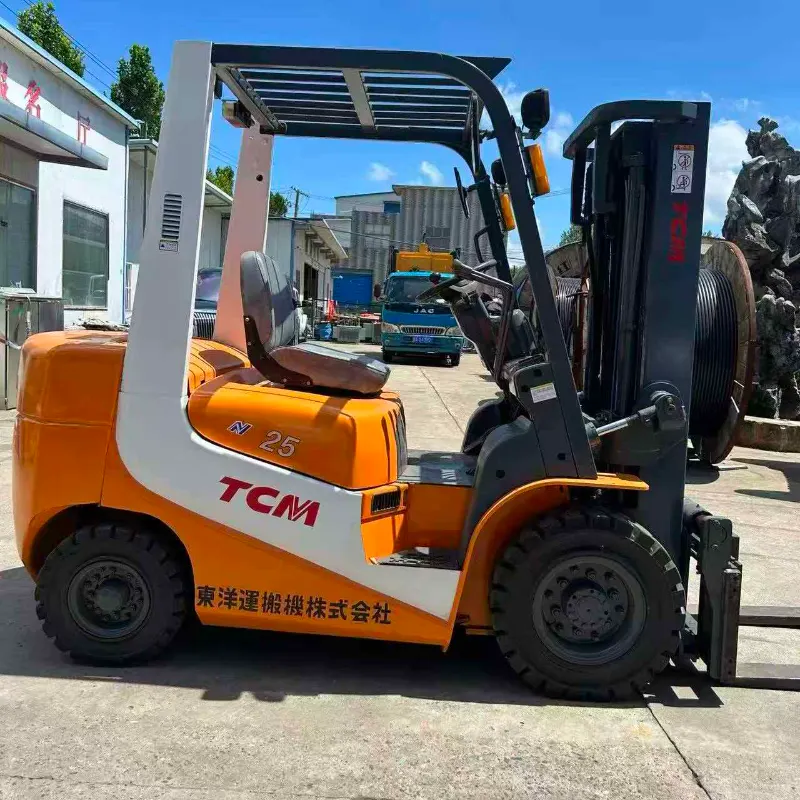
Counterbalance forklifts are widely used for pallet handling, truck loading, production support, and general warehouse operations. Their design allows the forks to approach loads without requiring support legs to extend beneath the pallet.
They can be suitable for warehouses with sufficient turning space, loading docks, and mixed indoor or outdoor handling requirements, depending on the power type and tire configuration.
When comparing used counterbalance forklifts, check rated capacity, overall width, turning radius, mast height, tire condition, and powertrain condition. Buyers should also confirm that the machine can handle the required loads at the actual lifting height.
Reach Trucks for High-Density Storage
Reach trucks are designed primarily for indoor pallet storage and retrieval, particularly in warehouses where space utilization is important. Their reach mechanism allows operators to position pallets in racking without the same counterweight arrangement used by conventional counterbalance forklifts.
They can be suitable for high-density storage layouts with relatively narrow aisles and high racking. However, they are not automatically the best choice for every narrow warehouse. The aisle layout, floor flatness, rack configuration, and load requirements must all be compatible with the selected model.
When evaluating a used reach truck, inspect the reach mechanism, mast movement, wheels, battery condition, and control system. Confirm the required working aisle width and lifting capacity at the intended height.
Electric Forklifts for Indoor Operations
Electric forklifts are often considered for indoor warehouses because they produce no exhaust emissions at the point of use and can operate with relatively low noise levels. They may be particularly suitable for food distribution, retail logistics, and facilities where indoor air quality is a priority.
The main purchasing consideration is battery performance. A used electric forklift with an aging battery may have a substantially shorter operating time than expected, even if its other components remain serviceable.
Ask for battery age, available capacity test results, charging history, and information about the charger. Compare the expected runtime with daily operating hours, shift patterns, and available charging time.
Also check whether replacement batteries and compatible chargers are readily available in the destination market.
Internal Combustion Forklifts for Mixed or Outdoor Use
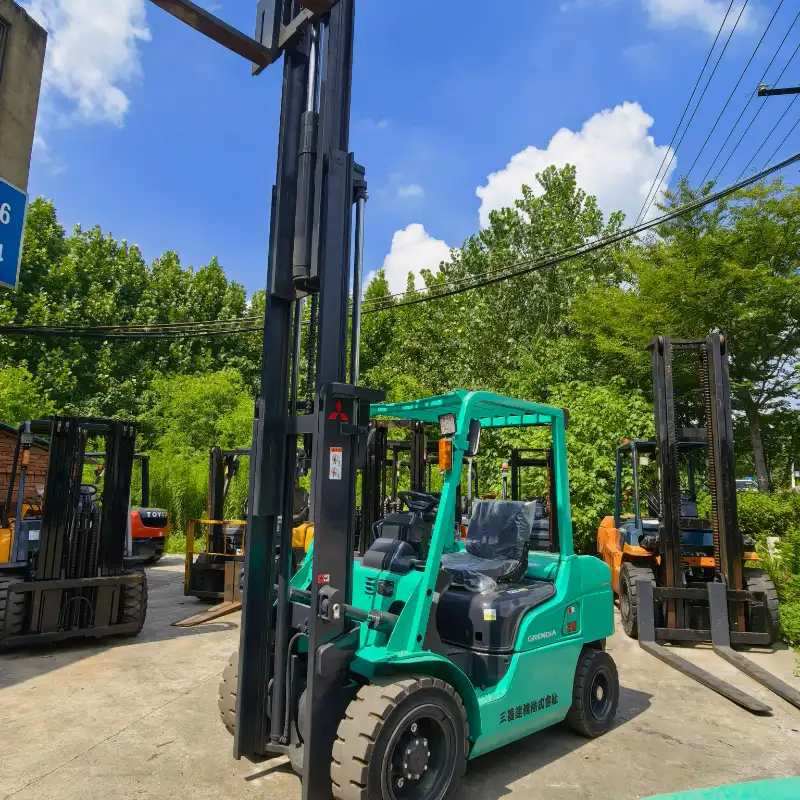
Diesel, LPG, and other internal combustion forklifts may suit certain outdoor yards, loading areas, and industrial environments. Their suitability depends on local emissions requirements, ventilation, operating conditions, and the type of work being performed.
Diesel models may be appropriate for some demanding outdoor applications, while LPG models may suit operations that require refueling flexibility. Neither should be selected solely on the assumption that internal combustion equipment is more powerful or economical.
For a used machine, inspect the engine, transmission, cooling system, fuel system, exhaust, and hydraulic components. Buyers importing equipment should also verify whether the selected engine and emissions configuration are permitted in the destination country.
Evaluate Used Forklifts Beyond Their Advertised Specifications
Once the suitable forklift types have been identified, compare individual machines based on their condition and expected service requirements.
Operating Hours and Maintenance History
Operating hours provide a useful reference, but they do not tell the whole story. A forklift with relatively low indicated hours may have experienced poor maintenance, prolonged outdoor exposure, or demanding load cycles.
Review available service records and compare them with the hour-meter reading and visible wear. Pay particular attention to the mast, forks, hydraulic cylinders, steering components, tires, brakes, and operator controls.
For electric models, battery condition should be assessed separately from the forklift's indicated operating hours. For combustion models, engine performance and transmission condition deserve particular attention.
Spare Parts and Local Servicing
A used forklift can become an expensive purchase if routine maintenance requires difficult-to-source parts or specialized overseas support.
Before choosing a model, check the availability of filters, tires, hydraulic seals, batteries, and other commonly replaced components in the destination country. For older models, confirm whether local technicians can service the engine, transmission, electrical system, or control components.
A model with slightly higher upfront costs may offer better long-term value if maintenance is simpler and replacement parts are readily available.
Inspection Before Shipment
When buying remotely, request photographs and videos of the actual machine, along with its model number, serial number, specifications, and available maintenance records.
A pre-shipment inspection can help identify defects that are difficult to assess from photographs. Depending on the forklift type, the inspection may include starting and driving performance, lifting and lowering functions, hydraulic leaks, braking, steering, safety equipment, and battery testing.
The inspection scope and the process for handling discrepancies should be agreed upon before payment and shipment.
Calculate the Total Cost of Importing Used Forklifts
The lowest advertised price does not necessarily represent the best purchase. Overseas buyers need to compare the total cost of acquiring, shipping, clearing, and preparing each machine for operation.
The overall cost may include:
- Purchase price and inspection fees.
- Inland transportation and export handling.
- International freight and cargo insurance.
- Destination-port handling, customs clearance, and applicable duties or taxes.
- Inland delivery to the warehouse.
- Initial servicing, replacement parts, or required compliance work.
Shipping costs vary according to the machine's dimensions, weight, origin and destination ports, and shipping arrangements. Buyers should request quotations based on clearly defined delivery terms to avoid comparing prices that cover different services.
Import regulations also vary by country. Before purchasing, confirm whether used forklifts are permitted, whether age or emissions restrictions apply, and which customs documents or inspections are required.
These checks are especially important when comparing machines of different ages or power types. A forklift that is inexpensive to purchase may be unsuitable if it cannot legally enter the destination market or requires costly modifications.
Plan the Purchase Around Your Warehouse's Actual Workload
The best forklift is not necessarily the newest model, the highest-capacity machine, or the one with the lowest purchase price. It is the model that can handle the required loads safely and efficiently within the warehouse's physical and operational constraints.
Buyers comparing used Japanese forklifts and construction machinery should distinguish between warehouse forklift requirements and those of other machinery categories. Construction machinery may serve different applications, so its specifications and costs should be assessed separately rather than treated as directly interchangeable with warehouse forklifts.
For buyers looking for Japanese used forklifts for sale, a practical comparison should consider:
- Required load capacity and lifting height.
- Warehouse aisle width, floor conditions, and overhead clearance.
- Electric or internal combustion power requirements.
- Actual equipment condition and maintenance history.
- Parts availability and expected servicing costs.
- Shipping expenses and destination-country import requirements.
A written comparison of these factors makes it easier to identify suitable models and explain the purchasing decision to internal stakeholders.
Frequently Asked Questions
Are Electric Forklifts or Diesel Forklifts Better for Warehouses?
Electric forklifts are often suitable for indoor operations where exhaust emissions and noise need to be minimized. Diesel forklifts may suit some outdoor industrial applications. The right choice depends on ventilation, operating hours, floor conditions, local regulations, and the availability of charging or refueling facilities.
What Should Overseas Buyers Check Before Importing a Used Forklift from Japan?
Verify the machine's specifications, identification details, maintenance history, and operating condition. Then confirm destination-country import requirements, shipping arrangements, customs charges, and local parts availability. A pre-shipment inspection can provide additional assurance before the machine leaves Japan.
How Can Buyers Compare the Real Cost of Different Used Forklift Models?
Compare the purchase price together with freight, insurance, import duties, customs clearance, delivery, and initial maintenance. For electric models, include the expected cost of battery replacement where relevant. This provides a more realistic basis for comparing the total cost of ownership.
Find a Forklift That Fits Your Warehouse
Choosing the right used forklift starts with a clear understanding of load requirements, warehouse layout, operating conditions, and import costs. Debo Machinery offers buyers a starting point for evaluating used forklifts and other machinery for international purchasing. Share your required capacity, lifting height, warehouse conditions, and destination country to help narrow the options to equipment worth evaluating.